


 English
 中文简体
中文简体
Table of Contents
- 1 I. The Demand for Ultra-Pure Nutraceuticals
- 2 II. Purity Benchmarks: Meeting Pharmacopoeial Standards
- 3 III. Advanced Quality Control: HPLC and Impurity Profiling
- 4 IV. Safety and Degradation Management
- 5 V. Cocrystal Technology: The Stability Advantage
- 6 VI. Assurance Through Analytical Rigor
- 7 VII. Frequently Asked Questions (FAQs)
- 7.1 Q1: Why is an oxidizing agent used when quantifying total CoQ10 via HPLC?
- 7.2 Q2: What is the risk associated with high levels of residual solvents in Coenzyme Q10 Powder?
- 7.3 Q3: How does the ubiquinone purity test for heavy metals using ICP-MS differ from older testing methods?
- 7.4 Q4: What is the main indicator of poor oxidized CoQ10 powder degradation control?
- 7.5 Q5: Does meeting the ubiquinone powder purity level USP EP standards guarantee long-term stability?
I. The Demand for Ultra-Pure Nutraceuticals
Coenzyme Q10 Powder (ubiquinone) is a paramount ingredient in the nutraceutical and dietary supplement landscape, serving as a vital component in the mitochondrial respiratory chain where it facilitates Adenosine Triphosphate synthesis. Its profound biological importance, however, is offset by its chemical vulnerability. As a yellow-to-orange crystalline powder, CoQ10 is highly sensitive to light and heat, which accelerate oxidation and decomposition, leading to color darkening and a loss of potency. For manufacturers and B2B buyers, guaranteeing the purity and stability of the raw Coenzyme Q10 Powder is the first step toward delivering effective and safe consumer products. Cocrystal Technology Co., Ltd., founded by distinguished scientists, addresses these stability challenges head-on. We specialize in cocrystal technology, an advanced formulation method that significantly enhances the stability, solubility, and bioavailability of active ingredients. This platform ensures our premium ingredients meet the highest standards, delivering tangible health benefits backed by scientific rigor.
II. Purity Benchmarks: Meeting Pharmacopoeial Standards
The international pharmaceutical and nutraceutical industries rely on established standards, such as those published by the United States Pharmacopeia and European Pharmacopoeia, to define ingredient quality.
A. Ubiquinone Powder Purity Level USP EP Standards
To qualify as pharmacopoeial grade, Coenzyme Q10 Powder must typically adhere to a minimum assay purity of Not Less Than 98.0% (calculated on an anhydrous basis). This high requirement ensures minimal dilution by process impurities and maximizes the therapeutic value per unit weight. However, purity is a multivariate parameter; compliance also demands limits on specific known impurities, including the related substances and degradation products. A comparison of commercial versus certified grades highlights the required commitment to quality:
| CoQ10 Grade | Minimum Assay Purity | Impurity Control (Specific Limits) |
|---|---|---|
| Standard Commercial Grade | 95.0% - 97.5% | Often limited control over individual impurities |
| Pharmacopoeial Grade (USP/EP) | 98.0% or higher | Strict limits on residual solvents, heavy metals, and related substances (e.g., ubiquinol) |
III. Advanced Quality Control: HPLC and Impurity Profiling
The verification of ultra-high purity requires High-Performance Liquid Chromatography (HPLC) , the most robust analytical tool for material separation and quantification.
A. HPLC Quantification of Total CoQ10 and CoQ10 Ubiquinol Isomer Detection HPLC
For a standard potency assay, the total CoQ10 content (ubiquinone plus any ubiquinol present) is measured. This requires a crucial sample pretreatment: the addition of a mild oxidizing agent, such as Ferric Chloride, which drives the equilibrium mechanics to ensure all reduced ubiquinol is converted to the stable oxidized ubiquinone form. This guarantees an accurate quantification of the *total* available CoQ10 (ubidecarenone), typically detected at two hundred seventy-five nanometers. However, to assess stability, the individual forms must be analyzed. The challenge of CoQ10 ubiquinol isomer detection HPLC involves separating the two redox forms without chemical modification. This sensitive method allows manufacturers to quantify the amount of the reduced form (ubiquinol) present in the purportedly oxidized ubiquinone powder, providing a critical marker for degradation, as ubiquinol forms rapidly upon exposure to light and oxygen.
B. Coenzyme Q10 Powder HPLC Residual Solvent Limits
Residual solvents are organic volatile chemicals used or produced during the synthesis and purification of Coenzyme Q10 Powder. As potential toxins, their presence must be tightly controlled according to international guidelines (International Council for Harmonisation Q3C and United States Pharmacopeia Chapter 467). Coenzyme Q10 Powder HPLC residual solvent limits are determined using gas chromatography (GC) headspace analysis, which offers high precision for volatile compounds like Acetonitrile, Tetrahydrofuran, and Hexanes. The solvents are classified by risk, necessitating varying control limits:
| ICH Class | Risk Profile | Example Solvent (Parts Per Million Limit) | Analytical Method |
|---|---|---|---|
| Class 1 | Known Carcinogens (High Risk) | Benzene (2 PPM) | GC Headspace/HPLC |
| Class 2 | Reversible Toxicity (Lower Risk) | Acetonitrile (410 PPM) | GC Headspace/HPLC |
| Class 3 | Low Toxic Potential | Ethanol (5000 PPM) | GC Headspace or LOD (Loss on Drying) |
Controlling these solvents is particularly vital, as residual polar solvents can destabilize the CoQ10 crystal lattice and accelerate degradation.
IV. Safety and Degradation Management
A. Ubiquinone Purity Test for Heavy Metals: ICP-MS Application
Inorganic impurities, particularly heavy metals, pose severe health risks. The ubiquinone purity test for heavy metals adheres to the stringent limits set by United States Pharmacopeia Chapters 232 and 233. This testing relies on Inductively Coupled Plasma Mass Spectrometry (ICP-MS) due to its exceptional sensitivity, allowing for reliable quantification of elemental impurities such as Lead, Mercury, Cadmium, and Arsenic down to parts per billion levels. Mitigation requires meticulous control over both the synthetic raw materials and the elimination of metal contact points in manufacturing equipment.
B. Oxidized CoQ10 Powder Degradation Control and Antioxidant Use
The oxidized CoQ10 powder degradation control strategy is multi-faceted. CoQ10 is prone to photo-oxidation, leading to color changes (dark yellow) and the formation of unknown degradation products that reduce potency. In final formulations, the addition of external antioxidants (like Ascorbic Acid or EDTA) is often necessary to scavenge free radicals and curb the initial rate of peroxide formation. However, the most robust control involves enhancing the intrinsic stability of the powder itself through advanced formulation, as achieved via cocrystal technology.
V. Cocrystal Technology: The Stability Advantage
Cocrystal Technology Co., Ltd.'s proprietary platform offers a scientific breakthrough for highly sensitive ingredients. By creating cocrystals, we engineer a new solid form of the Coenzyme Q10 Powder with enhanced physicochemical properties. This fundamentally improves stability, protecting the molecule from light and heat, and significantly increases its dissolution rate. For B2B partners, this translates directly into a more robust ingredient, simpler final formulation, a longer shelf life, and guaranteed bioavailability, differentiating their end-products in a competitive market.
VI. Assurance Through Analytical Rigor
Sourcing premium Coenzyme Q10 Powder demands a partnership with a supplier that not only targets the minimum ubiquinone powder purity level USP EP standards but also employs comprehensive analytical controls. Rigorous testing using HPLC for Coenzyme Q10 Powder HPLC residual solvent limits and CoQ10 ubiquinol isomer detection HPLC, coupled with ICP-MS for ubiquinone purity test for heavy metals, provides the necessary quality assurance. By integrating advanced stability technology, like cocrystallization, manufacturers can confidently deliver the highest quality, most stable ingredients to the global nutraceutical market.

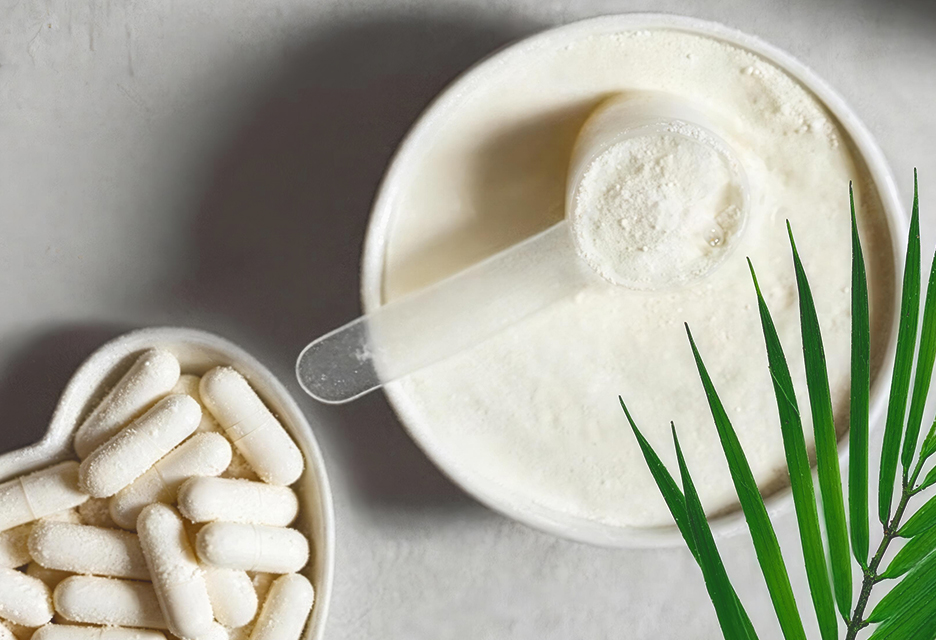
(Image generated by AI.)
VII. Frequently Asked Questions (FAQs)
Q1: Why is an oxidizing agent used when quantifying total CoQ10 via HPLC?
- A: An oxidizing agent (e.g., Ferric Chloride) is used to ensure all CoQ10, whether originally present as the oxidized ubiquinone or the degraded/reduced ubiquinol, is converted entirely into the oxidized ubiquinone form. This step standardizes the sample, allowing for the accurate quantification of the *total* CoQ10 content against a ubiquinone standard.
Q2: What is the risk associated with high levels of residual solvents in Coenzyme Q10 Powder?
- A: The risks are two-fold: Safety (potential toxicity, governed by strict Parts Per Million limits under ICH guidelines) and Stability. Residual solvents can plasticize or alter the crystal structure of the Coenzyme Q10 Powder, accelerating its degradation during storage.
Q3: How does the ubiquinone purity test for heavy metals using ICP-MS differ from older testing methods?
- A: Older methods (like United States Pharmacopeia Chapter 231) were non-specific and qualitative. ICP-MS (Inductively Coupled Plasma Mass Spectrometry) is a highly sensitive and quantitative method that accurately measures the specific concentration of individual toxic elements (like Lead, Mercury, etc.) down to Parts Per Billion levels, ensuring compliance with modern, lower regulatory limits (United States Pharmacopeia Chapter 232).
Q4: What is the main indicator of poor oxidized CoQ10 powder degradation control?
- A: The two main indicators are visual color darkening (from yellow to dark yellow/orange) and, analytically, an increase in the detectable amount of the reduced form (ubiquinol) and other degradation byproducts, as revealed by CoQ10 ubiquinol isomer detection HPLC.
Q5: Does meeting the ubiquinone powder purity level USP EP standards guarantee long-term stability?
- A: No. While the minimum purity of 98.0% or higher is essential, it is only a measurement at the time of testing. Long-term stability requires additional factors, including low initial ubiquinol content, specialized packaging, and advanced formulation techniques, such as cocrystallization, to protect the powder from environmental degradation over its shelf life.


