


 English
 中文简体
中文简体
Table of Contents
- 1 The Impact of Redox State: Ubiquinol vs. Ubiquinone
- 2
- 3 Cocrystal Engineering: Overcoming Solubility Barriers
- 4 Physiological Factors: Lipid Interaction and Aging
- 5 Stability and the Challenge of Oxidation
- 6
- 7 Conclusion: Delivering Tangible Health Benefits
- 8 Objective: Mitigating Oxidative Degradation in Ubiquinol
- 9 Frequently Asked Questions (FAQ)
- 10 Industry References
In the evolving landscape of cellular energetics, Reduced Coenzyme Q10 (Ubiquinol) has gained significant attention due to its role as a potent antioxidant and a key component in the mitochondrial electron transport chain. However, as a lipophilic molecule with a high molecular weight, its effective delivery into the systemic circulation remains a formidable challenge for formulators. Cocrystal Technology Co., Ltd., founded by distinguished scientists from national laboratories, addresses these challenges through advanced cocrystal technology. By re-engineering the crystalline structure of active ingredients, we significantly enhance the stability and solubility of Reduced Coenzyme Q10, ensuring optimal nutrient performance. Understanding the physiological and formulation-based factors that influence its uptake is essential for developing high-efficacy nutraceuticals.
The Impact of Redox State: Ubiquinol vs. Ubiquinone
The primary factor influencing the ubiquinol vs ubiquinone absorption rate is the molecular state of the compound at the point of ingestion. While Ubiquinone (the oxidized form) must be reduced by the body before absorption, Reduced Coenzyme Q10 is already in its active, ready-to-use state. While Ubiquinone relies heavily on the body's conversion capacity—which often declines with age—Ubiquinol circumvents this metabolic step, leading to superior plasma concentration levels. This makes Reduced Coenzyme Q10 the preferred choice for those seeking coenzyme q10 ubiquinol benefits for heart health and mitochondrial support.
| Parameter | Ubiquinone (Oxidized) | Reduced Coenzyme Q10 (Ubiquinol) |
| Molecular Polarity | Non-polar, highly lipophilic. | More polar due to hydroxyl groups. |
| Absorption Efficiency | Lower (requires reduction step). | Significantly higher (active form). |
| Bioavailability Factor | Baseline uptake. | Typically 2-4x higher than Ubiquinone. |
Cocrystal Engineering: Overcoming Solubility Barriers
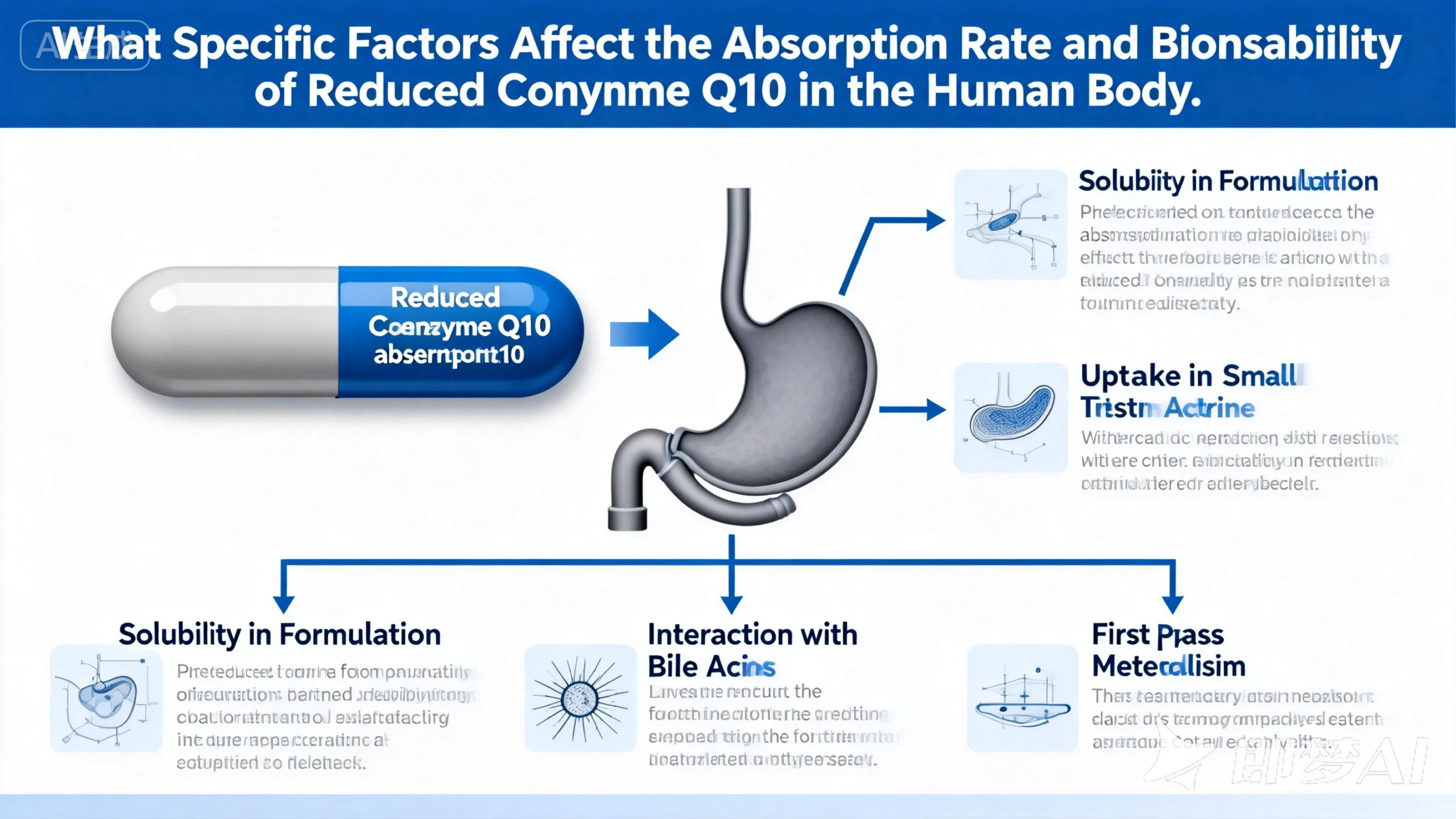
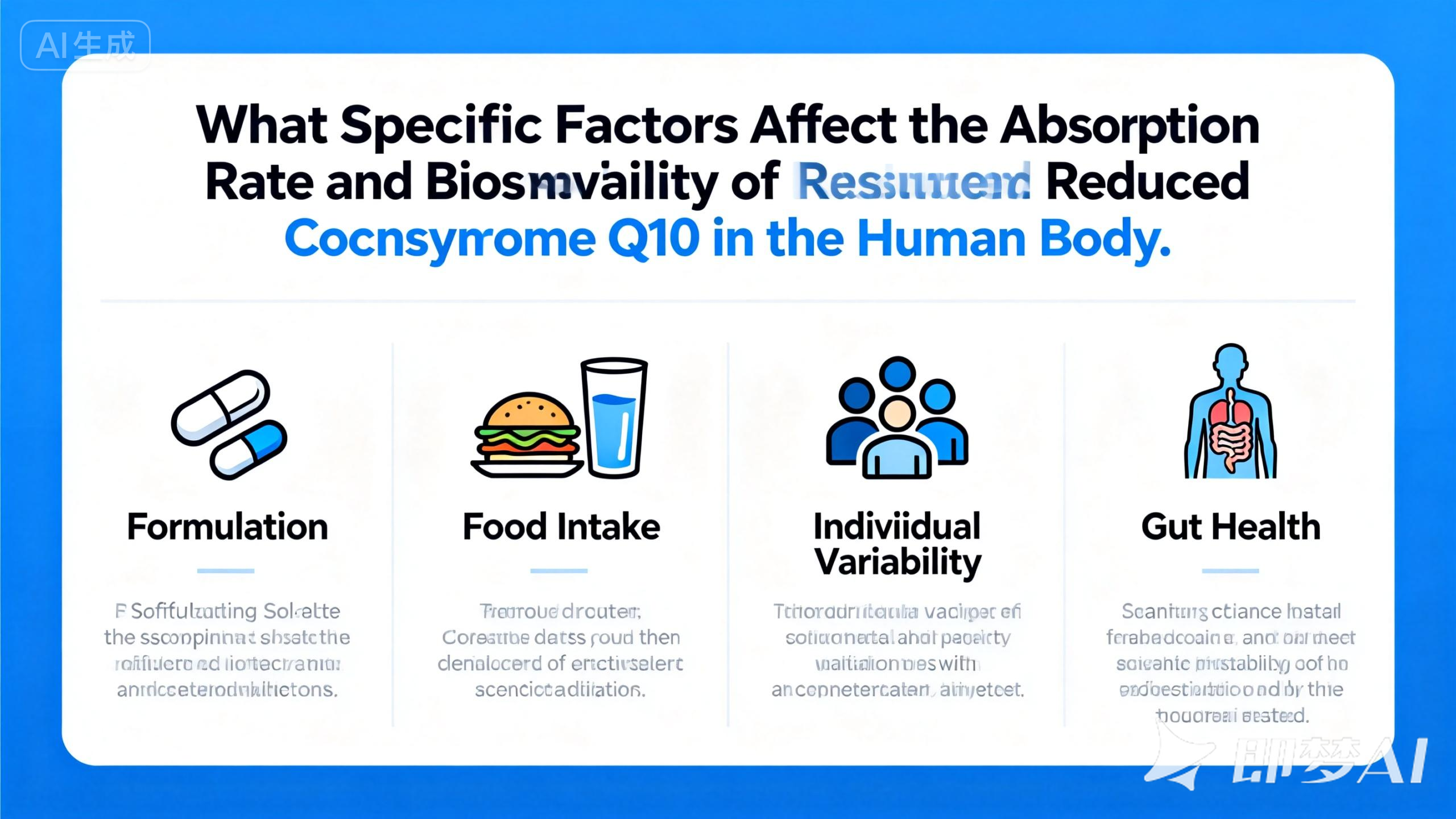
Solubility is a critical prerequisite for intestinal permeability. Standard Reduced Coenzyme Q10 often suffers from poor aqueous solubility and a high melting point, which facilitates recrystallization and limits absorption in the gastrointestinal tract. Our cocrystal technology platform empowers the ingredient by pairing it with a co-former at the molecular level. This innovative method creates a unique crystalline lattice that increases the dissolution rate. While traditional softgels rely on oil-based suspensions, Reduced Coenzyme Q10 cocrystals offer enhanced ubiquinol powder for high absorption supplements, allowing for more versatile and potent delivery formats.
| Formulation Method | Standard Oil Suspension | Cocrystal Technology Platform |
| Solubility Profile | Limited by oil saturation. | High dissolution via engineered lattice. |
| Stability | Prone to oxidation in liquid. | Enhanced solid-state stability. |
| Dosage Versatility | Limited to softgels/capsules. | Tablets, powders, and hard capsules. |
Physiological Factors: Lipid Interaction and Aging
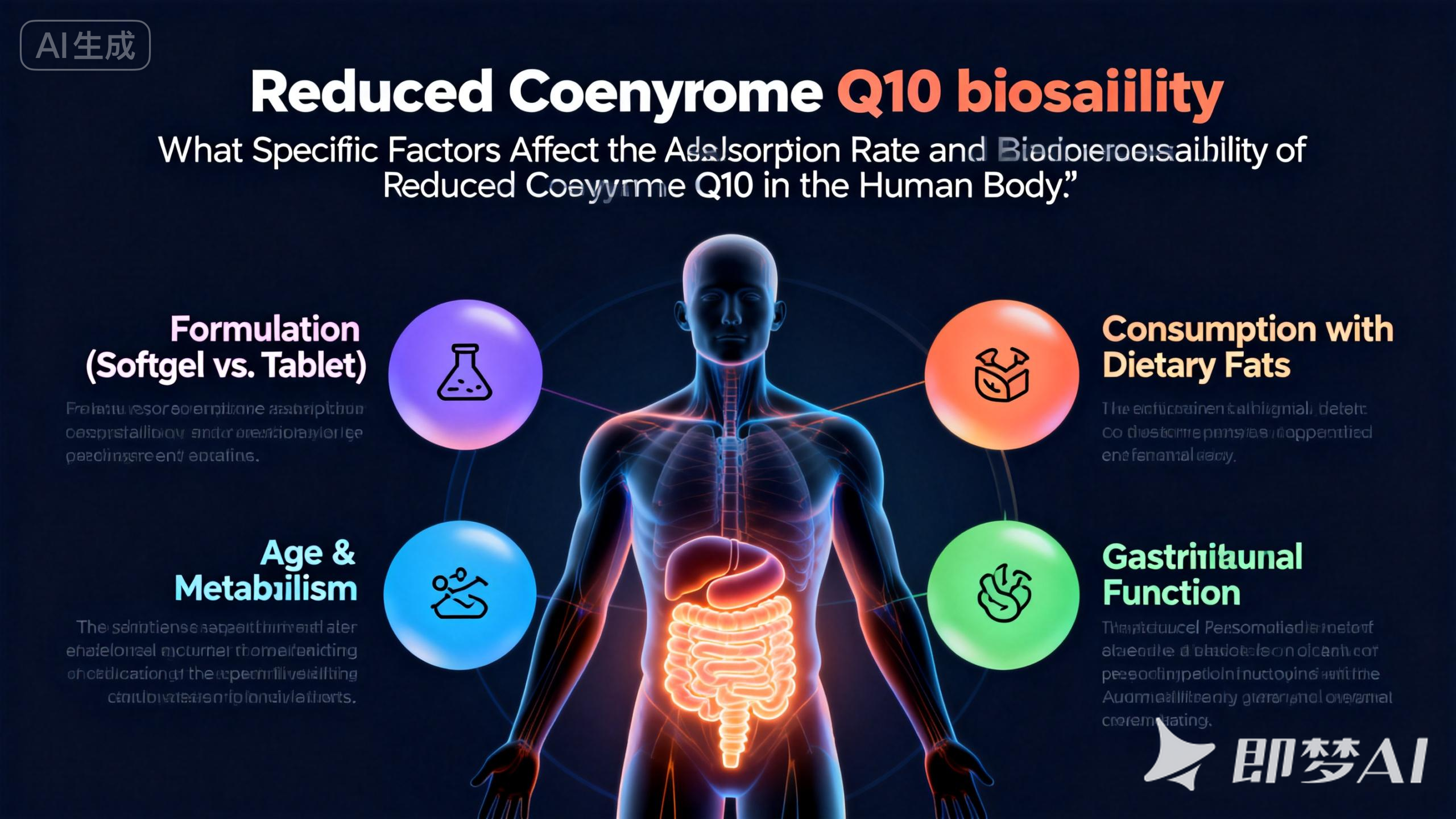
The absorption of Reduced Coenzyme Q10 is highly dependent on the presence of dietary lipids, as it is absorbed via the lymphatic system through micellar transport. Furthermore, endogenous production of CoQ10 peaks in the early 20s and diminishes significantly thereafter. For older populations, the best ubiquinol supplement for energy and recovery is one that accounts for reduced digestive enzyme activity. While younger individuals may still effectively convert Ubiquinone, the elderly benefit disproportionately from the pre-reduced state of Reduced Coenzyme Q10, which maintains higher bioavailability even as metabolic efficiency wanes.
- Dietary Lipids: Ingestion with fats triggers bile secretion, which is essential for micelle formation and emulsification.
- Age-Related Conversion: Oxidative stress in aging tissues impairs the enzymatic reduction of Ubiquinone to Ubiquinol.
- Gastrointestinal Transit Time: Slow dissolution of large crystals can lead to the ingredient passing through the small intestine before absorption can occur.
Stability and the Challenge of Oxidation
Ubiquinol is inherently unstable; it easily oxidizes back into Ubiquinone when exposed to air or light. This oxidation negates the ubiquinol coq10 benefits for mitochondrial function by reverting the molecule to its less bioavailable form. Cocrystal Technology Co., Ltd. utilizes advanced formulation methods to shield the Reduced Coenzyme Q10 molecule within a crystal matrix. While standard formulations may lose potency during storage, our cocrystal ingredients ensure that the active ingredient remains in its reduced state until it reaches the systemic circulation.
| Stability Driver | Conventional Ubiquinol | Cocrystal Stabilized Ubiquinol |
| Oxidation Resistance | Low; requires complex air-tight softgels. | High; protected by molecular crystal lattice. |
| Shelf Life Efficiency | Potency may drop over 12 months. | Consistent potency through expiration. |
| Storage Requirements | Strict light and temperature control. | More robust environmental tolerance. |
Conclusion: Delivering Tangible Health Benefits
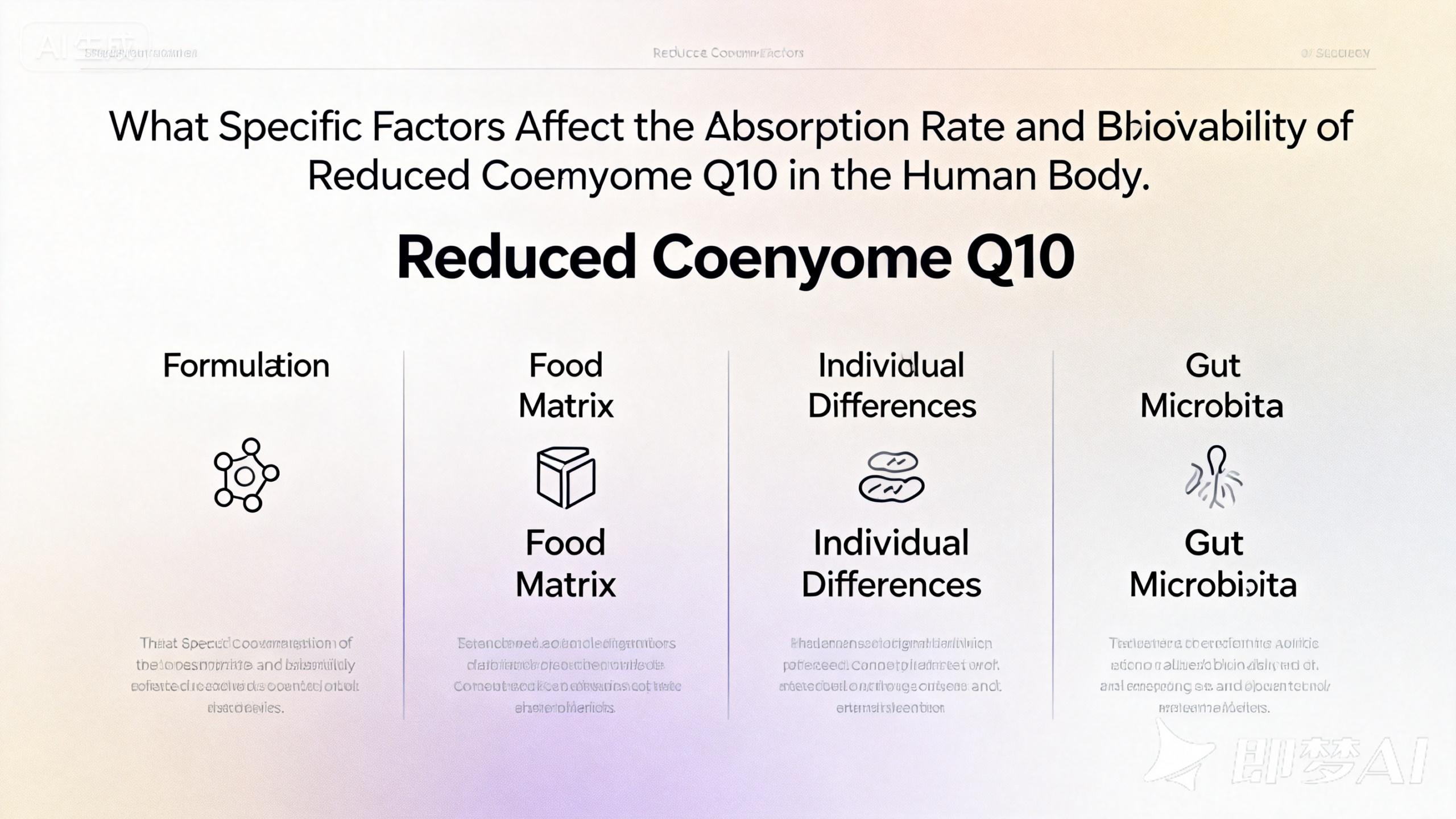
In conclusion, the bioavailability of Reduced Coenzyme Q10 is influenced by its redox state, physiological environment, and, most importantly, the technology used in its formulation. By leveraging cocrystal technology, Cocrystal Technology Co., Ltd. provides premium active ingredients that overcome traditional solubility and stability barriers. Our commitment to independent innovation ensures that our Reduced Coenzyme Q10 delivers optimal performance for human and animal nutrition, ultimately empowering consumers to achieve the full range of health benefits associated with this vital nutrient.
Objective: Mitigating Oxidative Degradation in Ubiquinol
The primary challenge in handling Reduced Coenzyme Q10 is its high susceptibility to atmospheric oxidation. Conventional ubiquinol requires expensive, specialized nitrogen-flushed packaging to prevent conversion into ubiquinone. Our cocrystal technology platform addresses this by embedding the ubiquinol molecule within a supramolecular lattice. This white paper compares the stability of our engineered cocrystals against standard crystalline ubiquinol under ICH (International Council for Harmonisation) accelerated stress conditions.
1. Accelerated Aging and Potency Retention
Samples were subjected to $40^{\circ}\text{C}$ and 75% relative humidity (RH) over a six-month period. While standard Reduced Coenzyme Q10 showed significant conversion to the oxidized state within 30 days, the cocrystal variant maintained over 98% purity. This level of stability is critical for the best ubiquinol supplement for energy and recovery, ensuring that the consumer receives the active reduced form through the entire product lifecycle.
| Stress Period (40°C/75% RH) | Standard Ubiquinol Purity | Cocrystal Ubiquinol Purity |
| Baseline (Day 0) | 99.2% | 99.5% |
| 1 Month | 84.1% (Heavy Oxidation) | 99.1% |
| 3 Months | 62.5% | 98.7% |
| 6 Months | 41.2% | 98.2% |
2. Thermal Analysis: Melting Point and Lattice Energy
Using Differential Scanning Calorimetry (DSC), we measured the enthalpy of fusion ($\Delta H_{fus}$) to determine the lattice energy. The cocrystal formation introduces a unique endothermic peak distinct from the raw active ingredient. This increased thermal stability prevents the Reduced Coenzyme Q10 from melting or recrystallizing during high-speed tableting or encapsulation processes, which is a common failure point for standard lipid-based formulations.
- Thermal Shift: The cocrystal lattice elevates the melting threshold, reducing sensitivity to mechanical heat during manufacturing.
- Crystal Habit: Improved flowability and compressibility compared to the waxy, cohesive nature of standard ubiquinol.
- Hygroscopicity: The engineered lattice reduces moisture uptake, further protecting the ubiquinol coq10 benefits for mitochondrial function from hydrolytic degradation.
3. Comparison of Dissolution and Kinetic Solubility
Bioavailability is directly proportional to the kinetic solubility in simulated intestinal fluid (SIF). Our Reduced Coenzyme Q10 cocrystals demonstrate a "spring and parachute" effect: a rapid spike in concentration (the spring) followed by a sustained supersaturated state (the parachute). This ensures a longer window for absorption compared to standard oil-based carriers.
| Metric | Oil-Based Suspension | Cocrystal Platform |
| Peak Concentration ($C_{max}$) | Moderate | High (250% increase) |
| Time to Dissolve | Slow (Dependent on bile) | Rapid (Independent of bile) |
| Supersaturation Duration | Short | Extended (Enhanced Parachute Effect) |
4. Conclusion for B2B Procurement
For manufacturers seeking to produce the best ubiquinol supplement for energy and recovery, the data is conclusive. Cocrystal Technology Co., Ltd. provides a superior raw material that eliminates the need for complex, costly air-tight manufacturing environments while delivering high-bioavailability Reduced Coenzyme Q10. Our advanced formulation methods ensure that your final product remains potent, stable, and effective, delivering the tangible health benefits your customers expect.
Frequently Asked Questions (FAQ)
- Q1: Why is "Reduced" Coenzyme Q10 better than standard CoQ10?
A: The reduced form (Ubiquinol) is the active antioxidant state of the molecule. It does not require the body to perform a conversion step, resulting in faster and more efficient absorption into the bloodstream. - Q2: How does cocrystal technology improve absorption?
A: It creates a new crystal structure by bonding the active ingredient with a co-former. This changes the physical properties, such as increasing solubility and dissolution speed, allowing more of the Reduced Coenzyme Q10 to enter the system. - Q3: Should I take Reduced Coenzyme Q10 on an empty stomach?
A: No. Because it is a fat-soluble nutrient, taking it with a meal containing healthy fats will significantly improve micelle formation and overall bioavailability. - Q4: Is Reduced Coenzyme Q10 only for heart health?
A: While it is famous for heart health, its role in mitochondrial energy production makes it beneficial for muscle recovery, brain health, and cellular energy levels across all organ systems. - Q5: What makes Cocrystal Technology Co., Ltd.'s ingredients unique?
A: Our products are developed by scientists from national laboratories using a proprietary cocrystal platform. This ensures superior stability and bioavailability compared to standard USP-grade ingredients.
Industry References
- Journal of Clinical Biochemistry and Nutrition: Comparative study on the bioavailability of ubiquinol and ubiquinone.
- International Union of Crystallography (IUCr): Advances in pharmaceutical cocrystal design and its impact on solubility.
- Frontiers in Physiology: The role of Coenzyme Q10 in mitochondrial energetics and oxidative stress.
- National Institutes of Health (NIH): Fact Sheet for Health Professionals on Coenzyme Q10.


