


 English
 中文简体
中文简体
Table of Contents
- 1 1. Clinical Backing + Authoritative Recognition: The Solid Efficacy of CoQ10
- 2 2. Reduced vs. Oxidized Form: Crystal Form Stability is the Deciding Factor for Absorption Rate
- 3 3. Industry Pain Points: Three Core Challenges of Reduced CoQ10
- 4 4. Technological Innovation: The Evolutionary History of Crystal Form Technology for Reduced CoQ10
- 5 5. From Patent Blockades to Technological Leaps: Reshaping the Competitive Landscape of Reduced CoQ10
- 6 6. Technological Advantage Highlighted: Cocrystal Technology Builds Irreplicable Technological Advantages for End Brands
In the wave of the global health industry, Coenzyme Q10 (CoQ10), as a core substance in cellular energy metabolism and antioxidant defense, has long become a classic ingredient in the nutritional supplement market. The global CoQ10 market has surpassed the multi-billion-dollar mark, projected to grow from approximately $8.18 billion in 2024 to over $18 billion by 2032, with a compound annual growth rate (CAGR) of over 10%, demonstrating strong growth momentum. North America currently holds the largest share of the global market (approximately 40–55%), driven by high consumer awareness, a mature industry ecosystem, and strong health demands. Meanwhile, the Asia-Pacific region is poised to be the fastest-growing potential market, benefiting from an expanding middle class, rising health consciousness, and increasing consumption of nutritional supplements.
In terms of product structure, oxidized CoQ10 (ubiquinone) still dominates the market, accounting for over 60% of total sales, reflecting its broad consumer base as a classic supplement formulation. Meanwhile, reduced CoQ10 (ubiquinol), leveraging its higher bioavailability and absorption efficiency, is rapidly gaining share in high-end functional demand segments and is becoming the fastest-growing sub-category.
From authoritative endorsements in evidence-based medicine to enthusiastic reception in the consumer market, and from overcoming technological bottlenecks to China's independent innovation in manufacturing, the development journey of reduced CoQ10 has been filled with scientific exploration and industrial competition. Today, we will comprehensively analyze the core value and industry dynamics of this star ingredient.
1. Clinical Backing + Authoritative Recognition: The Solid Efficacy of CoQ10
The application of Coenzyme Q10 is backed by robust clinical evidence, with its effectiveness continuously reinforced. In the evidence-based medicine system, over 1,000 human clinical studies published worldwide to date systematically validate its crucial role in cardiac energy metabolism and antioxidant protection.
In the field of cardiovascular health, Japan listed Coenzyme Q10 as a prescription drug for congestive heart failure as early as 1974 for clinical treatment. The 2022 Heart Failure Management Guidelines jointly issued by the American College of Cardiology, American Heart Association, and Heart Failure Society of America (ACC/AHA/HFSA) explicitly state that Coenzyme Q10 supplementation helps reduce the incidence of major adverse cardiovascular events and all-cause mortality in heart failure patients.
Regarding hypertension management, multiple systematic meta-analyses show that CoQ10 can significantly lower systolic and diastolic blood pressure levels, providing dual protection for cardiovascular health through "energy support + antioxidant protection" by improving vascular endothelial function and mitochondrial energy metabolism.
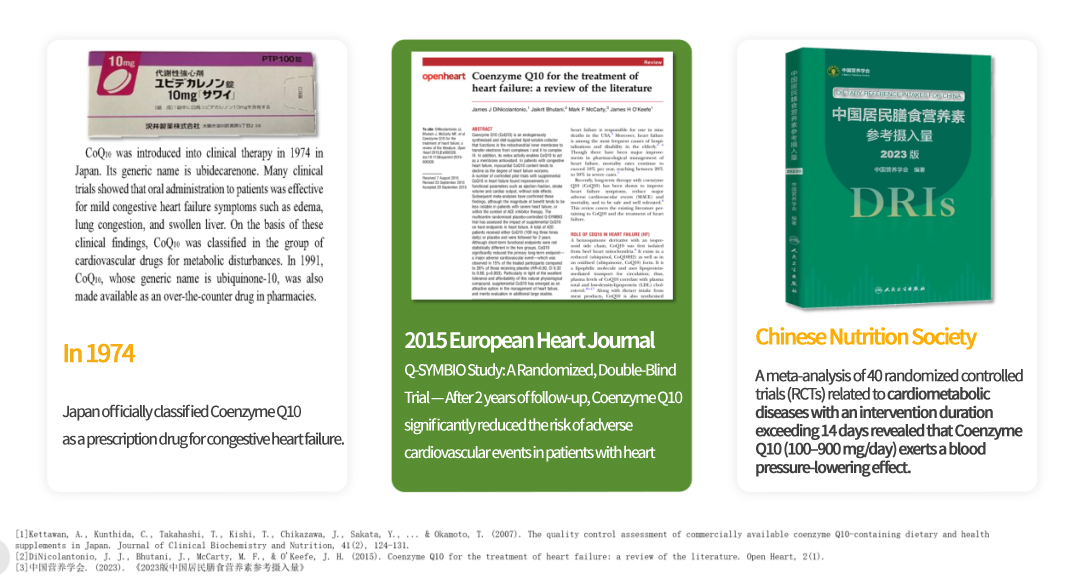
Beyond the cardiovascular field, CoQ10 also demonstrates outstanding performance in areas like anti-fatigue, exercise performance enhancement, and migraine prevention, serving as a key foundational ingredient in sports nutrition and functional health. Numerous global human clinical studies indicate that CoQ10 can alleviate post-exercise muscle damage, improve peak power output, and reduce oxidative stress damage to the body by regenerating vitamin E and regulating the body's antioxidant homeostasis.
In contrast, human clinical research on the more active reduced CoQ10 (ubiquinol) has focused more on high-end specific efficacy areas, particularly anti-aging and reproductive health. As a fat-soluble antioxidant that the human body can synthesize, ubiquinol is hailed as an "all-around guardian" in anti-aging: whether it's maintaining youthful skin, supporting the vascular system critical for systemic circulation, or protecting ovaries and germ cells highly dependent on energy and antioxidant defense, ubiquinol can delay functional decline through the synergistic mechanism of "antioxidant + mitochondrial energy supply."
Specifically, clinical studies confirm that reduced CoQ10 can significantly improve sperm concentration, motility, and morphology in men, and enhance ovarian responsiveness and in vitro fertilization (IVF) success rates in women, gradually becoming an important nutritional support component in assisted reproduction. The core mechanism lies in the fact that sperm and eggs are highly sensitive to oxidative stress, and ubiquinol can effectively protect germ cell DNA from oxidative damage, thereby improving reproductive quality and conception rates.
| Application areas | Recommended dosage range(mg/day) | Core clinical outcomes | Source[21] |
| Cardiovascular disease | 100-600 | Reduce mortality, reduce hospitalizations, and improve cardiac function |
[3]-[8] |
| Hypertension | 100-200 | Systolic blood pressure dropped by up to 17mmHg, diastolic blood pressure dropped by the maximum 10mmHg | [4][8] example: Digiesi, V., Cantini, F., Oradei, A., Bisi,G., Guarino, G. C., Brocchi, A., & Littarru, G.P.(1994). Coenzyme Q10 in essentialhypertension. Molecular aspects ofmedicine, 15, s257-s263. |
| Improved sports performance | 100-300 | Enhance peak power, reduce muscle damage, and relieve fatigue | [9][10] example: Cooke, M., losia, M., Buford,T.,Shelmadine, B., Hudson, G., Kerksick, C.Kreider, R. (2008). Effects of acute and 14-day coenzyme Q10supplementation onexercise performance in both trained and untrained individuals. Journal of theInternational Society of Sports Nutrition, 5(1),8. |
| Male reproductive health | 200-600 | Improve sperm concentration, motility and morphological integrity | [12]-[14] example: Balercia, G., Buldreghini, E., Vignini, A.,Tiano, L., Paggi, F., Amoroso, S. Littarru, G.(2009). Coenzyme Q10 treatment in infertilemen with idiopathic asthenozoospermia: aplacebo-controlled, double-blindrandomized trial. Fertility and sterility, 91(5),1785-1792. |
| Female assisted reproduction | 200-600 | Improve ovarian response, increase high-quality embryo rate and clinical pregnancy rate | [15][16] example:Safarinejad, M. R.(2012). The effect ofcoenzyme Q10 supplementation on partner pregnancy rate in infertile men withidiopathic oligoasthenoteratozoospermia: an open-label prospective study. Internationalurology and nephrology, 44(3), 689-700. |
| Anti-fatigue | 100-300 | Anti-fatigue, reduce post-exercise muscles Reduces muscle damage and relieves subjective fatigue |
[17]-[19] example: Mizuno, K., Tanaka, M., Nozaki, S.,Mizuma, H., Ataka, S., Tahara, T. Watanabe,Y. (2008). Antifatigue effects of coenzymeQ10 during physical fatigue. Nutrition, 24(4),293-299. |
| Migraine Prevention | 100-300 | Reduce the frequency and duration of attacks | [20]Hershey, A. D., Powers, S. W., Vockell, A.L. B., LeCates, S. L., Ellinor, P. L., Segers, A.Kabbouche, M. A.(2007). Coenzyme Q10deficiency and response to supplementationin pediatric and adolescent migraine.Headache: the journal of head and face pain,47(1),73-80. |
2. Reduced vs. Oxidized Form: Crystal Form Stability is the Deciding Factor for Absorption Rate
The two existing forms of Coenzyme Q10 are the oxidized form (ubiquinone) and the reduced form (ubiquinol). Due to the limited solubility and transmembrane transport capacity of traditional oxidized CoQ10 in the gastrointestinal tract, its oral bioavailability has long been restricted.
In contrast, reduced CoQ10, being in a reduced form closer to the active state within the body, exhibits higher affinity. Studies show that 95% of CoQ10 in human blood circulation exists in the reduced form and is transported via blood to organs and tissues with the highest energy demands, such as the heart, brain, liver, and skeletal muscles, directly participating in energy metabolism processes within cell mitochondria. Conversely, oxidized CoQ10 must be converted into the reduced form by reductase systems before entering the circulation and being utilized by tissues. This conversion process adds a degree of uncertainty to absorption and utilization.
This is precisely why the CoQ10 industry earlier debated "which is better, oxidized or reduced?" with the core divergence focusing on absorption efficiency and bioactivity. The root of the controversy stemmed from observations in 2015 by Dr. Judy, based on animal experimental models, suggesting that "reduced CoQ10 is almost completely converted to the oxidized form before intestinal absorption." This view once sparked widespread skepticism in the market regarding the efficacy advantages of reduced CoQ10.
However, with technological advancements, this long-standing industry controversy is gradually being re-examined and clarified. Subsequent research found that the insufficient crystal form stability of the reduced CoQ10 used in Dr. Judy's experiment was the key factor causing its easy oxidation in the gastrointestinal environment. Conversely, experiments on mice conducted in 2023 by the team of Hiroshi Kubo, using reduced CoQ10 with stable crystal form, drew the opposite conclusion: orally administered reduced CoQ10 remained structurally stable in the gastrointestinal tract without significant oxidation and was directly absorbed into the body in its reduced form.
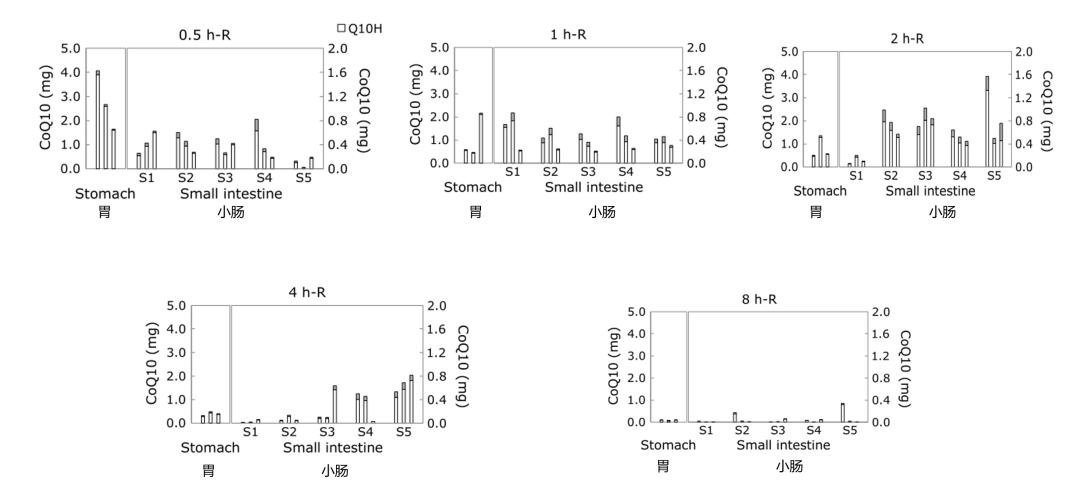
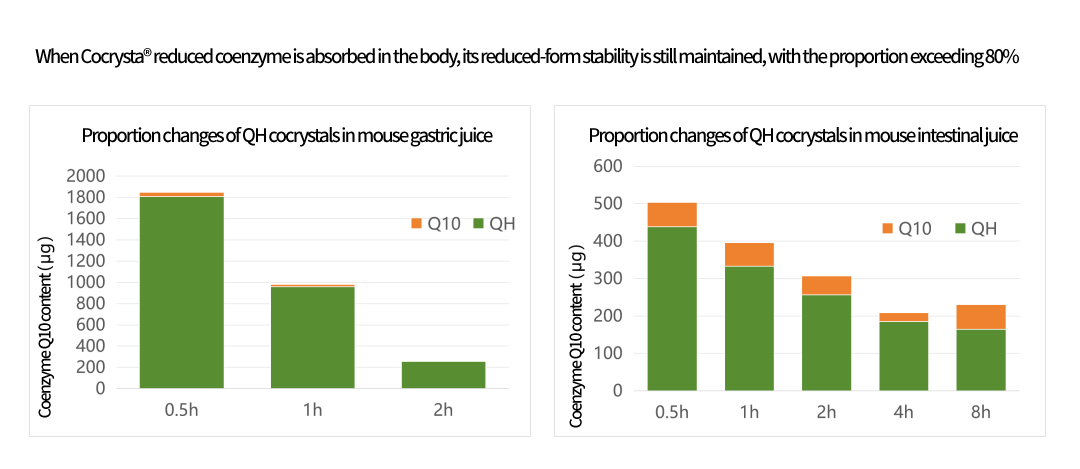
Cocrystal Technology, founded by Professor Mei Xuefeng, an expert in solid-state chemistry from the Shanghai Institute of Materia Medica, Chinese Academy of Sciences, is dedicated to applying advanced drug delivery technologies to the health and wellness sector. Its flagship product, Cocrysta® QH, significantly enhances the stability of reduced CoQ10 in the gastrointestinal environment by constructing a cocrystal structure of reduced CoQ10 and nicotinamide. Its animal experimental results further validate the conclusion of Hiroshi Kubo's team: throughout gastric digestion, CoQ10 remains primarily in the reduced form; during the intestinal phase, over 80% remains in the reduced state for 0–8 hours and can be directly absorbed and participate in the body's energy metabolism. This result fundamentally dispels the traditional notion that "most reduced form is oxidized in the gut" from a mechanistic perspective and clearly points to the fact that breakthroughs in crystal form technology are the key variable determining the absorption performance of reduced CoQ10.
Further randomized double-blind crossover human clinical studies on Cocrysta® QH also indirectly validate the same conclusion. Compared to the control group supplementing with traditional oxidized CoQ10, most individuals in the group supplementing with Cocrysta® QH showed significantly increased exposure levels of CoQ10 in the body, with improvements of up to 8-fold. This result indicates that, given sufficient stability, reduced CoQ10 can more efficiently enter systemic circulation and be utilized by the human body, thereby truly unleashing its potential value in energy metabolism and cellular function support.
3. Industry Pain Points: Three Core Challenges of Reduced CoQ10
Despite the significant advantages of reduced CoQ10 in bioactivity and functional performance, its industrial application has long been constrained by three structural bottlenecks, which have become the core obstacles limiting its widespread adoption.
- Insufficient Chemical Stability
As an active molecule in the reduced state, reduced CoQ10 is highly sensitive to oxygen, light, and temperature changes, making it extremely prone to oxidation into the oxidized form during production, transportation, and storage, leading to loss of active ingredient. This characteristic imposes extremely stringent requirements on the supply chain – production processes must be completed under strict anaerobic or low-oxygen conditions, and finished products often rely on deoxidized or nitrogen-flushed packaging for protection; otherwise, product quality and efficacy stability are difficult to guarantee. - Complex Manufacturing Processes and High Costs
Compared to the highly mature fermentation and purification processes for oxidized CoQ10, the preparation of reduced CoQ10 not only requires additional reduction and stabilization steps but also must minimize oxidative losses throughout the entire process, leading to significantly higher production costs than oxidized products. In the early stages, only a very few companies mastered the core technology, coupled with tight patent barriers, resulting in long-term limitations in raw material supply. This ultimately kept end-product prices high, hindering its penetration into the mass market. - Highly Concentrated Supply Chain and Strong Dependence
For a long period, the global supply of reduced CoQ10 raw materials was controlled by a handful of companies, with extremely high industry concentration. Downstream brands generally faced issues such as unstable supply and limited bargaining power in raw material procurement. Once capacity fluctuations, trade frictions, or compliance risks occurred, supply chain disruptions could ensue, directly affecting continuous product availability and market expansion.
It is precisely these multiple limitations that have kept reduced CoQ10, despite its clear scientific advantages, confined to a "niche high-end" application stage for a long time. Breaking through the underlying technological pathways is urgently needed to truly unleash its market potential.
4. Technological Innovation: The Evolutionary History of Crystal Form Technology for Reduced CoQ10
To overcome these pain points, the industry's technological path has undergone multiple iterations and upgrades, gradually progressing from formulation-level stabilization attempts to crystal engineering optimization, and finally moving towards frontier cocrystal technology based on materials science. This continuous evolution has systematically enhanced the stability, processability, and application scenarios of reduced CoQ10.
Evolution of Reduced Coenzyme Q10 Technology
| Technical stage | core technology | Representative enterprise | Improved stability | Applicable dosage forms |
| First generation | Added antioxidants (vitamin C, lipoic acid) |
Japan Kaneka | * * | Soft capsule |
| Second generation | Crystal optimization (Crystal formForm II) |
Japan Kaneka | * * * | Soft capsule |
| Third generation | Eutectic technology (panthenol + nicotinamide) | Cocrystal Technology | ** ** | Soft capsules, hard capsules, gummies, etc. |
Stage One: Early Stabilization Techniques
In the initial phase of technological development, the industry primarily improved the stability of reduced CoQ10 through formulation means. For example, adding antioxidant ingredients like vitamin C or alpha-lipoic acid to the formulation creates a relatively reductive microenvironment for ubiquinol, delaying its oxidation; or using nitrogen-flushed protective packaging to reduce contact with oxygen during storage and transportation. However, such methods are essentially "external interventions," only delaying the oxidation process to a certain extent. They cannot precisely control the redox state of CoQ10 at the molecular or crystal level, leading to stability fluctuations and quality control risks in long-term storage and large-scale applications.
Stage Two: Crystal Optimization Technology
Building on this, crystal engineering became a key breakthrough direction for enhancing the stability of reduced CoQ10. Kaneka's related technology is representative, having developed two different crystal forms of ubiquinol raw material: Form I and Form II. Among them, Form I, due to its unstable crystal structure, is prone to oxidation under gastrointestinal or storage conditions. Although it was commercially attempted, it never gained widespread market acceptance. The academic community generally believes that the phenomenon observed by Dr. Judy in the 2015 study – "reduced CoQ10 is almost completely converted to the oxidized form before intestinal absorption" – likely originated from the use of such unstable crystal forms.
In contrast, the Form II crystal form achieved commercial success due to significantly improved stability. It is transported and stored using nitrogen protection and is mainly used in softgel capsule formulations with higher sealing properties. Form II represented the first breakthrough in commercialized reduced CoQ10 products, but its application remains limited by dosage forms and process conditions, imposing higher requirements on production, packaging, and the supply chain.
Stage Three: Cocrystal Technology Breakthrough
Building upon crystal form optimization, the introduction of cocrystal technology marks a new stage in enhancing the stability of reduced CoQ10. Cocrystal technology is a frontier drug delivery technology derived from the field of supramolecular chemistry. Unlike traditional oil-based dissolution or encapsulation methods, it involves the orderly combination of reduced CoQ10 and the vitamin component nicotinamide at the molecular level, forming a novel, highly stable cocrystal composite structure. It is worth noting that supramolecular chemistry and its related research directions have received the Nobel Prize in Chemistry three times to date, fully reflecting the scientific value and cutting-edge nature of this technological system.
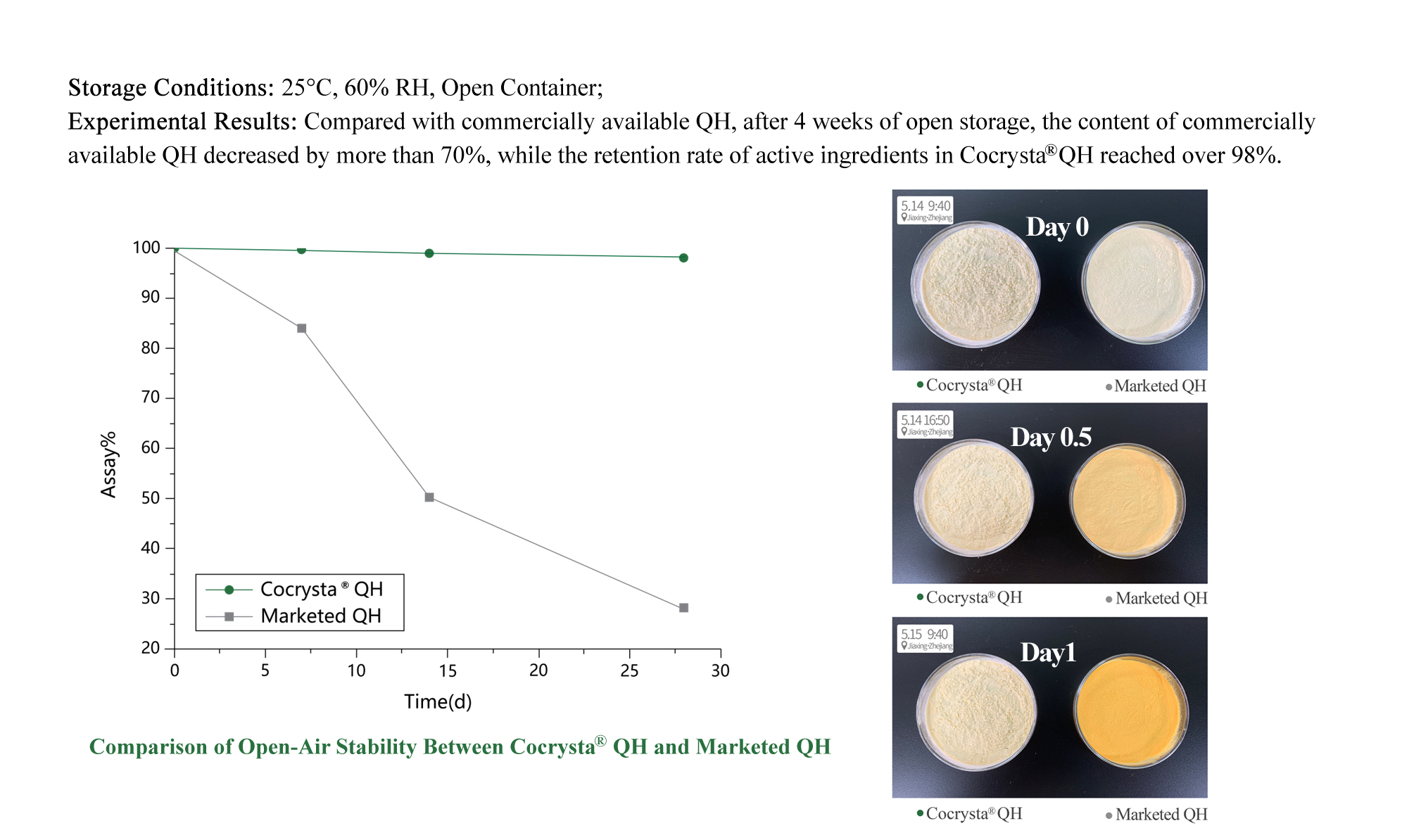
Experimental results show that cocrystallized reduced CoQ10 has achieved a qualitative leap in stability. Compared to commercially available ordinary reduced CoQ10, after 4 weeks of open-air placement, the active ingredient content of ordinary ubiquinol products decreased by over 70%, while the cocrystallized reduced CoQ10 still retained over 98% of its active ingredient. This superior stability eliminates the need for nitrogen protection during transportation, processing, and storage and greatly expands commercial application possibilities – it is not only suitable for softgels but can also be widely used in various solid dosage forms such as hard capsules and gummies, providing greater freedom for brand innovation and product diversification.
Moreover, the physiological synergy between nicotinamide and reduced CoQ10, which constitute the Cocrysta® QH cocrystal structure, forms a highly coordinated and mutually reinforcing mechanism within the human energy metabolism system. Nicotinamide, as a direct precursor to NAD⁺, can effectively elevate intracellular NAD⁺ levels upon entering the body and is reduced to NADH during metabolism. NADH then provides crucial reducing power for the electron transport chain within mitochondria with the involvement of Riboflavin (RF)-dependent enzyme systems, thereby continuously converting oxidized CoQ10 (ubiquinone) into its more active reduced form (ubiquinol).
This process signifies that nicotinamide in energy metabolism does not merely exist as a vitamin supplement but indirectly provides a continuous source of electrons for the "reduction pool" of the reduced form ubiquinol, helping to maintain the dynamic balance of CoQ10 in its reduced state. Consequently, CoQ10 can more stably and persistently perform its dual functions as an electron carrier and antioxidant in the electron transport chain, not only enhancing mitochondrial ATP synthesis efficiency but also reducing reactive oxygen species (ROS) generation caused by electron leakage.
From a holistic metabolic perspective, the synergistic effect of nicotinamide and reduced CoQ10 essentially constructs an interconnected energy support pathway of "NAD⁺-NADH-CoQ10," helping to maintain mitochondrial functional homeostasis while ensuring efficient energy output. Integrating nicotinamide with reduced CoQ10 through cocrystal technology is precisely based on this clear and solid physiological rationale.
5. From Patent Blockades to Technological Leaps: Reshaping the Competitive Landscape of Reduced CoQ10
The market competition for reduced CoQ10 is essentially a game of technology patents. After Japanese company Kaneka obtained a U.S. patent for a "process for producing coenzyme Q10" (Patent No. 7,910,340) in March 2011, it promptly initiated concentrated lawsuits against multiple CoQ10 suppliers (including Chinese companies like Zhejiang Medicine, Kingdomway, and Shenzhou) in the U.S. District Court for the Central District of California and simultaneously initiated USITC proceedings seeking import restrictions. From a motivational perspective, this round of litigation occurred against the backdrop of the gradual concentration of global CoQ10 production capacity in China and the increasing prominence of price and supply advantages, indicating a stronger commercial motive than technological exclusivity.
However, it is noteworthy that these patent lawsuits ultimately did not succeed. Related cases were either dismissed by the court regarding infringement claims, voluntarily withdrawn by Kaneka, or settled out of court in subsequent judicial or administrative proceedings, without forming any final, binding, or exclusive judgments with constraining effect. In other words, this round of litigation failed to establish Kaneka's decisive control over the related industrial production processes at a legal level.
Nevertheless, the lawsuits themselves caused significant negative impacts on the defendant companies, including high defense costs, customer confidence fluctuations, and short-term market disruptions. From an industry perspective, this incident more reflects the typical risk of patents being used as competitive tools rather than promoting innovation, exerting a suppressive effect on fair competition and long-term technological progress in the global CoQ10 market.
Cocrystal Technology, with its significantly original and independent cocrystal technology system, has achieved a structural leap in the technological pathway for reduced CoQ10. It has fundamentally reconstructed the existing patent framework centered on traditional stabilization methods from the underlying technology level, thereby posing a fundamental challenge to the long-standing technology and market landscape dominated by Kaneka.
Facing this challenge from the underlying technology level, Kaneka resorted to its old tactics, initiating a U.S. patent lawsuit against Cocrystal Technology in 2023. Its behavioral logic is highly similar to the 2011 lawsuits against Chinese suppliers: it does not stem from clear, valid, and solid technological exclusivity rights but rather attempts to disrupt the commercialization process of the new technological route by leveraging the time cost and uncertainty of litigation itself. This move precisely indicates from the side that the technological path represented by Cocrystal Technology has touched the core of the existing industry interest structure.
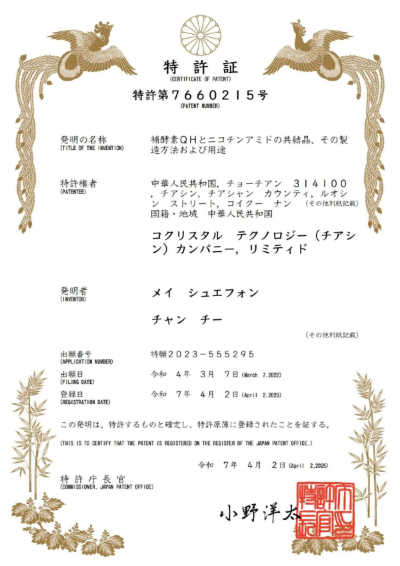
Despite facing enormous differences in corporate scale and resources, Cocrystal Technology actively defended the lawsuit while proactively pursuing a global patent strategy, systematically transforming cocrystal technology into defensible and scalable industrial competitiveness. Its core reduced CoQ10 cocrystal substance technology has obtained multiple independent intellectual property rights and successfully received patent authorization in Japan on April 2, 2024, marking the formal recognition of this technology within one of the world's strictest and most mature patent examination systems.
This not only signifies that Cocrystal Technology has completed the landing of intellectual property in a key overseas market but also marks the first time a Chinese company has entered the global technology rule-making level in the reduced CoQ10 field as an originator of a formulation. Industry competition is thus shifting from a contest of "production capacity and cost advantages" to the high-value-added track of "formulation engineering," systematically reshaping the original value chain structure centered on traditional production processes.
6. Technological Advantage Highlighted: Cocrystal Technology Builds Irreplicable Technological Advantages for End Brands
As a leading global innovator and supplier of reduced CoQ10, Cocrystal Technology is opening a new high-end development channel for Chinese health brands. Relying on the underlying supramolecular technology honored with three Nobel Prizes, Cocrystal Technology has constructed a complete technological system covering R&D, industrialization, and stable raw material supply. It provides brands with a core raw material solution possessing truly differentiated value, enabling products to have clear and credible technological backing right from the source.
From the perspective of brand competition, this innovative formulation capability brings substantive advantages to the Chinese health industry. The Cocrysta® QH reduced CoQ10 raw material, based on the original technological system, achieves internationally leading levels in stability and consistency. It empowers downstream brands to maintain high consistency and reliability in efficacy expression, formulation upgrades, and product line extensions, significantly enhancing brand compliance and brand power in major global markets. Simultaneously, scientific evidence-based backing helps brands compete in the high-end functional market with technological strength rather than price, effectively avoiding dependence on single overseas suppliers and patent narratives, providing a stable foundation for long-term brand management.
Cocrystal Technology offers not just a raw material but a "technology story" that can be told, verified, and continuously amplified. Leveraging this underlying innovation, brands can break free from the red ocean competition of ingredient homogeneity and construct product value propositions and high-end images with genuine distinctiveness. As the global CoQ10 market accelerates its evolution towards value-added and professionalization, this underlying innovative advantage derived from drug delivery technology is becoming a key engine for Chinese brands to step onto the international stage and build long-term brand equity.
Source:
[1] Coenzyme Q10 Market Size and Forecast by Application, Including Dietary Supplements, Pharmaceuticals, Cosmetics – Growth Trends, Key Players, Regional Analysis (2026-2035) Research NesterConnect.lead,Accomplish https://www.researchnester.com/tw/reports/coenzyme-q10-market/6882
[2] Based on statistics on pubmed as of December 17, 2025 https://pubmed.ncbi.nlm.nih.gov/term=coenzyme+q10+clincal+trail
[3] Martelli, A., Testai, L., Colletti, A., & Cicero, A. F. (2020). Coenzyme Q10: clinical applications in cardiovascular diseases. Antioxidants, 9(4), 341.
[4]Kawashima C, Matsuzawa Y, Konishi M, Akiyama E, Suzuki H, Sato R, Nakahashi H, Kikuchi S, Kimura Y, Maejima N, Iwahashi N, Hibi K, Kosuge M, Ebina T, Tamura K, Kimura K. Ubiquinol Improves Endothelial Function in Patients with Heart Failure with Reduced Ejection Fraction: A Single-Center, Randomized Double-Blind Placebo-Controlled Crossover Pilot Study. Am J Cardiovasc Drugs. 2020 Aug;20(4):363-372.
[5]Digiesi, V., Cantini, F., Oradei, A., Bisi, G., Guarino, G. C., Brocchi, A.,& Littarru, G. P. (1994). Coenzyme Q10 in essential hypertension. Molecular aspects of medicine, 15, s257-s263.
[6]Langsjoen, P. H., & Langsjoen, A. M. (2008). Supplemental ubiquinol in patients with advanced congestive heart failure. Biofactors, 32(1‐4), 119-128.
[7]Langsjoen, P. H., Langsjoen, J. O., Langsjoen, A. M., & Rosenfeldt, F. (2019). Statin-associated cardiomyopathy responds to statin withdrawal and administration of coenzyme Q10. The Permanente Journal, 23, 18-257.
[8] Sabbatinelli, J., Orlando, P., Galeazzi, R., Silvestri, S., Cirilli, I., Marcheggiani, F., ... & Tiano, L. (2020). Ubiquinol ameliorates endothelial dysfunction in subjects with mild-to-moderate dyslipidemia: a randomized clinical trial. Nutrients, 12(4), 1098.
[9] Cooke, M., Iosia, M., Buford, T., Shelmadine, B., Hudson, G., Kerksick, C.,& Kreider, R. (2008). Effects of acute and 14-day coenzyme Q10 supplementation on exercise performance in both trained and untrained individuals. Journal of the International Society of Sports Nutrition, 5(1), 8.
[10] Alf, D., Schmidt, M. E., & Siebrecht, S. C. (2013). Ubiquinol supplementation enhances peak power production in trained athletes: a double-blind, placebo controlled study. Journal of the International Society of Sports Nutrition, 10(1), 24.
[11] Mantle, D., Dewsbury, M., & Hargreaves, I. P. (2024). The Ubiquinone-Ubiquinol redox cycle and Its clinical consequences: An overview. International Journal of Molecular Sciences, 25(12), 6765.
[12] Thakur, A. S., Littaru, G. P., Funahashi, I., Painkara, U. S., Dange, N. S., & Chauhan, P. (2016). Effect of ubiquinol on serum reproductive hormones of amenorrhic patients. Indian Journal of Clinical Biochemistry, 31(3), 342-348.
[13] Thakur, A. S., Littarru, G. P., Funahashi, I., Painkara, U. S., Dange, N. S., & Chauhan, P. (2015). Effect of ubiquinol therapy on sperm parameters and serum testosterone levels in oligoasthenozoospermic infertile men. Journal of clinical and diagnostic research: JCDR, 9(9), BC01.
[14] Balercia, G., Buldreghini, E., Vignini, A., Tiano, L., Paggi, F., Amoroso, S., & Littarru, G. (2009). Coenzyme Q10 treatment in infertile men with idiopathic asthenozoospermia: a placebo-controlled, double-blind randomized trial. Fertility and sterility, 91(5), 1785-1792.
[15] Safarinejad, M. R. (2012). The effect of coenzyme Q10 supplementation on partner pregnancy rate in infertile men with idiopathic oligoasthenoteratozoospermia: an open-label prospective study. International urology and nephrology, 44(3), 689-700.
[16] Thakur, A. S., Littaru, G. P., Funahashi, I., Painkara, U. S., Dange, N. S., & Chauhan, P. (2016). Effect of ubiquinol on serum reproductive hormones of amenorrhic patients. Indian Journal of Clinical Biochemistry, 31(3), 342-348.
[17] Mizuno, K., Tanaka, M., Nozaki, S., Mizuma, H., Ataka, S., Tahara, T.,& Watanabe, Y. (2008). Antifatigue effects of coenzyme Q10 during physical fatigue. Nutrition, 24(4), 293-299.
[18] Mizuno, K., Sasaki, A. T., Watanabe, K., & Watanabe, Y. (2020). Ubiquinol-10 intake is effective in relieving mild fatigue in healthy individuals. Nutrients, 12(6), 1640.
[19] Fukuda, S., Nojima, J., Kajimoto, O., Yamaguti, K., Nakatomi, Y., Kuratsune, H., & Watanabe, Y. (2016). Ubiquinol‐10 supplementation improves autonomic nervous function and cognitive function in chronic fatigue syndrome. Biofactors, 42(4), 431-440.
[20] Hershey, A. D., Powers, S. W., Vockell, A. L. B., LeCates, S. L., Ellinor, P. L., Segers, A.,& Kabbouche, M. A. (2007). Coenzyme Q10 deficiency and response to supplementation in pediatric and adolescent migraine. Headache: the journal of head and face pain, 47(1), 73-80.
[21] 更多文献见资料来源见Elgar, K. (2021). Coenzyme Q10: a review of clinical use and efficacy. Nutr. Med. J., 1, 100-118.
[22] Kubo, H., Yamamoto, Y., & Fujisawa, A. (2022). Orally ingested ubiquinol-10 or ubiquinone-10 reaches the intestinal tract and is absorbed by the small intestine of mice mostly in its original form. Journal of Clinical Biochemistry and Nutrition, 72(2), 101.
[23] Zhang, Q., Xia, M., Zheng, C., Yang, Y., Bao, J., Dai, W., & Mei, X. (2023). The cocrystal of ubiquinol: improved stability and bioavailability. Pharmaceutics, 15(10), 2499.
[24] Cluis, C. P., Pinel, D., & Martin, V. J. (2012). The production of coenzyme Q10 in microorganisms. Reprogramming microbial metabolic pathways, 303-326.
[25] Kettawan, A., Kunthida, C., Takahashi, T., Kishi, T., Chikazawa, J., Sakata, Y.,& Okamoto, T. (2007). The quality control assessment of commercially available coenzyme Q10-containing dietary and health supplements in Japan. Journal of Clinical Biochemistry and Nutrition, 41(2), 124-131.
[26] Jarmuszkiewicz, W., Dominiak, K., Budzinska, A., Wojcicki, K., & Galganski, L. (2023). Mitochondrial coenzyme Q redox homeostasis and reactive oxygen species production. Frontiers in Bioscience-Landmark, 28(3), 61.
[27] WO2008145071A1 - A method of fermentation production of , accessed September 13, 2025, https://patents.google.com/patent/WO2008145071A1/en


